
Bread Dipping Olive Oil Recipe

A good bread dip should make you slow down after the first bite. The olive oil should taste fruity and rich, the garlic should be bold without being harsh, and the Italian seasoning should bring that warm, herby flavor that makes a simple loaf of bread feel like a restaurant-style starter.
This Bread Dipping Olive Oil Recipe comes together in about 10 minutes with pantry ingredients. No cooking is required, though one small step, letting the herbs sit in the oil before serving, makes a big difference. Serve it with warm crusty bread, focaccia, ciabatta, sourdough, or even soft dinner rolls when you want something easy that still feels special.

The best bread dipping oil starts with good olive oil
The olive oil is the base of the whole recipe, so choose one you enjoy on its own. You do not need the most expensive bottle in the store. You do need one that tastes fresh, smooth, and pleasant.
For dipping, extra virgin olive oil is the best choice. It has more flavor than light olive oil and brings the peppery, grassy, or buttery notes that make the dip taste complete. If your olive oil tastes flat or bitter in an unpleasant way, the finished dip will too.
A few quick tips help when choosing oil:
Look for extra virgin olive oil in a dark glass bottle or tin.
Avoid bottles that smell stale, waxy, or like old nuts.
Use an oil you would drizzle over salad or roasted vegetables.
Store olive oil away from heat and direct light.
The garlic matters just as much. Fresh garlic gives this dip its punch. Jarred minced garlic can work in a pinch, but it often tastes sharper and less fresh. For the best texture, mince the garlic very finely, grate it on a microplane, or mash it into a paste with a pinch of salt.
That last method is especially good if you want the garlic flavor to spread through every bite. A chunky garlic mince tastes great, but a garlic paste blends more evenly into the oil.
Italian seasoning keeps the recipe simple. Most blends include dried basil, oregano, rosemary, thyme, marjoram, or a mix of those herbs. Since dried herbs are stronger than fresh herbs, a little goes a long way. Letting them soak in the oil for a few minutes softens their texture and wakes up their flavor.
Ingredients for garlic Italian bread dipping oil
This recipe makes enough for 4 to 6 appetizer servings. It is easy to double for a larger table.
Ingredients
1/2 cup extra virgin olive oil
2 large garlic cloves, finely minced or grated
2 to 3 tablespoons of our Italian Seasoning Blend
1 tablespoons grated Parmesan cheese, optional
1 teaspoon balsamic vinegar, optional
Warm crusty bread, for serving
Ingredient notes
Garlic
Two cloves give the oil a bold garlic flavor. If the cloves are very large, start with one and add more after tasting. Raw garlic gets stronger as it sits.
Parmesan cheese
Parmesan adds a salty, savory finish. Use finely grated Parmesan so it settles into the oil and clings to the bread. Pecorino Romano also works, but it is saltier, so season carefully.
Balsamic vinegar
A small spoonful adds tang and sweetness. Some people love the contrast, while others prefer pure herb oil. Serve it on the side if you are making the dip for guests.

How to make garlic Italian bread dipping oil
This recipe is simple, but the order matters. Mixing the garlic, herbs, and seasonings first helps the flavor bloom before the bread hits the plate.
Step 1
Add the minced or grated garlic to a shallow serving bowl.
A shallow bowl works better than a deep one because the herbs, garlic, and cheese stay spread out. Each piece of bread can pick up the good bits instead of only soaking up plain oil from the top.
Step 2
Add the Italian seasoning.
Stir the dry seasonings into the garlic. This helps break up any clumps of dried herbs and spreads the salt evenly.
Step 3
Pour in the olive oil.
Stir gently until the garlic and herbs are suspended through the oil. Let the mixture sit for 5 to 10 minutes at room temperature before serving. This short rest gives the dried herbs time to soften and flavor the oil.
Step 4
Add parsley and Parmesan.
Fresh parsley brightens the dip and gives it a fresher finish. Parmesan adds depth and a little body. Stir them in just before serving so the parsley stays green and fresh.
Step 5
Taste and adjust.
Dip a small piece of bread into the oil. If it tastes flat, add another pinch of salt. If it tastes too sharp from the garlic, add another tablespoon or two of olive oil. If you want more tang, add a few drops of balsamic vinegar.
Step 6
Serve with warm bread.
Warm bread makes this dip better because it releases aroma and soaks up the seasoned oil. You can warm sliced bread in a 350°F oven for 5 to 8 minutes, or toast it lightly under the broiler. Watch it closely if using the broiler, since bread can go from golden to burned quickly.
The best dipping oil is not complicated. It is fresh olive oil, well-balanced seasoning, and bread sturdy enough to scoop up the garlic and herbs.
The best bread to serve with dipping oil
The right bread should have enough structure to hold up after dipping. A very soft sandwich bread can fall apart or become greasy. A sturdy loaf gives you crisp edges, chewy centers, and plenty of places for olive oil to soak in.
Good choices include:
Ciabatta
Focaccia
Sourdough
French bread
Italian boule
Baguette
Rustic whole grain bread
If the bread is fresh from the bakery, slice it thick and serve it warm. If it is a day old, toast it. Slightly dry bread actually works well because it absorbs the oil without turning mushy.
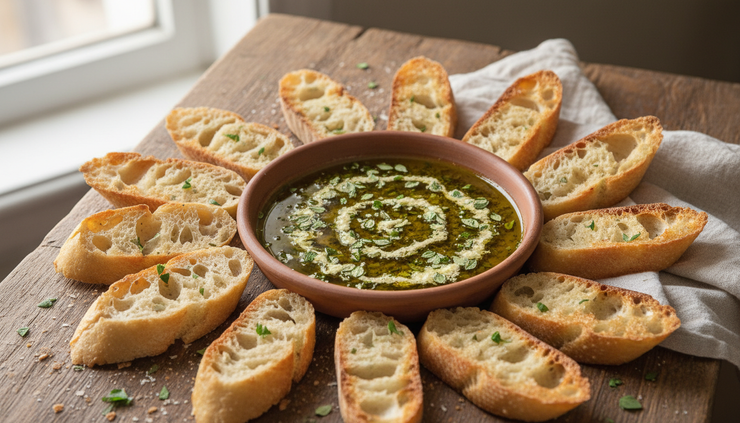
For a party platter, cut the bread into mixed shapes. Use slices, torn chunks, and toasted wedges. The platter looks more inviting, and people can choose the size they want.
To make the bread more flavorful, brush it lightly with olive oil before warming. You can also rub a cut garlic clove over toasted bread for extra garlic flavor. Go easy if your dipping oil is already heavy on garlic.
Easy ways to make the dip your own
Once you have the basic recipe, it is easy to adjust it for different meals. Keep the olive oil and garlic as the base, then change the herbs, acid, cheese, or heat.
Make it brighter
Add a little lemon zest or a squeeze of fresh lemon juice. Lemon works especially well if you are serving the dip with grilled chicken, fish, pasta, or a salad.
Use a light hand with lemon juice because too much can overpower the olive oil. Start with 1/2 teaspoon and taste before adding more.
Make it richer
Add more Parmesan or a small spoonful of finely chopped sun-dried tomatoes. Sun-dried tomatoes bring sweetness, chew, and a deeper savory flavor.
A few chopped olives also work well. Kalamata olives add briny flavor, while green olives taste sharper and brighter.
Make it spicier
Increase the crushed red pepper flakes to 1/2 teaspoon. You can also add a pinch of cayenne, but use it carefully. Cayenne spreads through oil quickly and can take over.
For a smoky version, add a tiny pinch of smoked paprika. It gives the dip a warm color and a subtle grilled flavor.
Make it herbier
Fresh basil, oregano, thyme, or rosemary can all work. Chop fresh herbs finely so they do not overwhelm a bite.
If using rosemary, use less than you think you need. Rosemary has a strong piney flavor, and large pieces can feel tough. A small pinch of finely minced fresh rosemary is plenty.
Make it feel like a restaurant appetizer
Serve the oil in a wide white bowl and drizzle a small swirl of balsamic vinegar over the top. Add a dusting of Parmesan, a pinch of red pepper flakes, and a few chopped parsley leaves right before serving.
Presentation matters here. The ingredients are simple, but a shallow bowl, warm bread, and fresh garnish make it feel generous.
Storage and make-ahead tips
This dip tastes best fresh. The garlic has the cleanest flavor, the herbs look their best, and the oil keeps its smooth texture. Still, you can do a little prep ahead if needed.
Mix the dried Italian seasoning, salt, pepper, and red pepper flakes in a small dish earlier in the day. Chop the parsley and grate the Parmesan. When you are ready to serve, mince the garlic, add the olive oil, and stir everything together.
Be careful with storing fresh garlic in oil. Garlic stored in oil at room temperature can create food safety concerns. For that reason, do not leave garlic olive oil sitting out for long periods, and do not store homemade garlic oil at room temperature.
For leftovers:
Refrigerate the dip in an airtight container.
Use it within 2 to 3 days.
Let it sit at room temperature briefly before serving because olive oil may thicken in the fridge.
Discard it if it smells off, tastes strange, or has been left out for several hours.
Leftover dipping oil can be used in other ways too. Spoon it over roasted vegetables, brush it on pizza crust, toss it with hot pasta, or drizzle it over grilled bread. If it contains Parmesan, warm it gently rather than heating it hard, since cheese can clump.

A simple appetizer worth repeating
Garlic Italian bread dipping oil is the kind of recipe that proves simple food can still feel special. Start with olive oil that tastes good, use fresh garlic, give the dried herbs a few minutes to bloom, and season until the bread tastes complete.
Serve it before pasta, alongside soup, with a salad, or as an easy snack board centerpiece. Once you make it a few times, you will know exactly how garlicky, spicy, tangy, or cheesy you like it. Keep the base recipe close, then adjust it to match the bread, the meal, and the people around the table.


Comments